Lexington Park is the commercial center of St. Mary’s County, built up around NAS Patuxent River and strung along Three Notch Road (MD-235). The residential edges are not the same as downtown. Great Mills, the lanes toward Cedar Cove, and the subdivisions cut into pine woods still have lots where loblolly, sweetgum saplings, and a wall of greenbrier are what the owner actually bought.
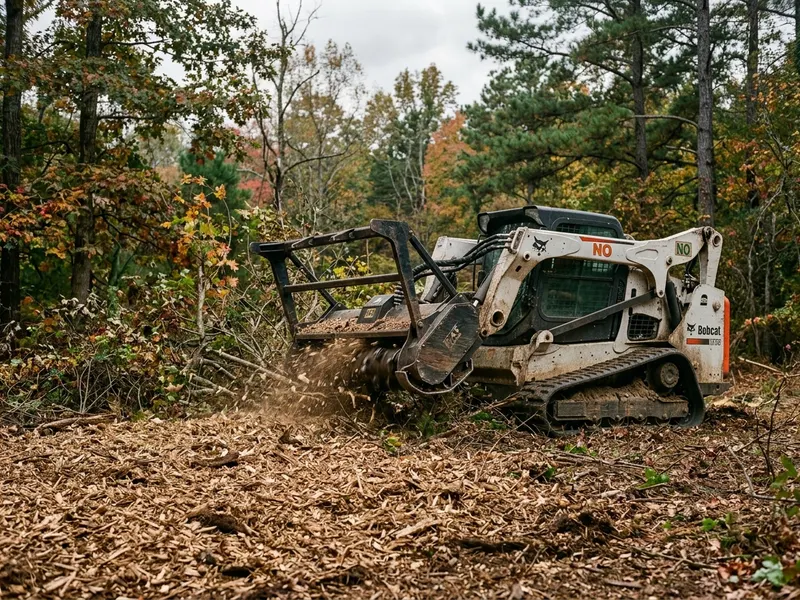
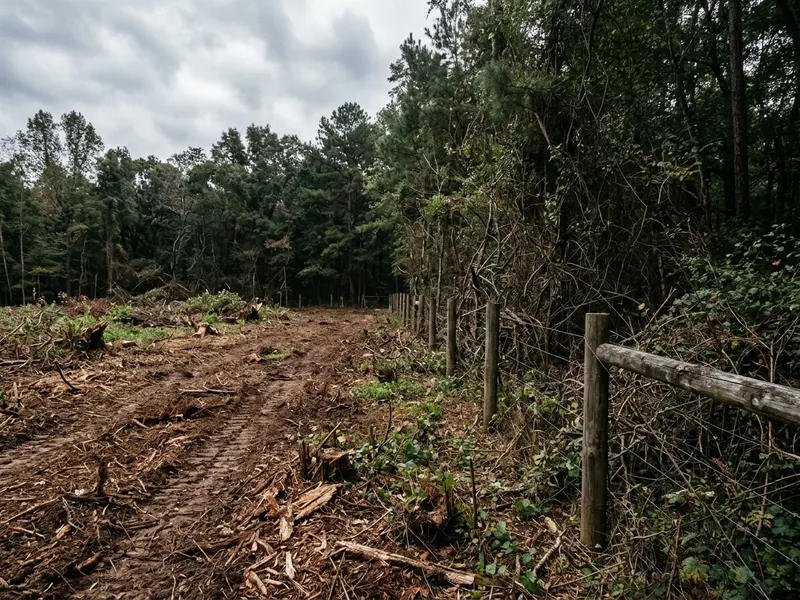
Forestry mulching fits that ground better than a line of trucks. The soil is sandy coastal plain. It moves when it is wet, and hauling every stick off a half-acre lot means driving that sand into ruts. A mulching head grinds the brush and the small pines where they stand and leaves a chip layer that holds the soil. Mature pines the owner wants for a screen get marked and stayed. Anything in the pad footprint is a different conversation.
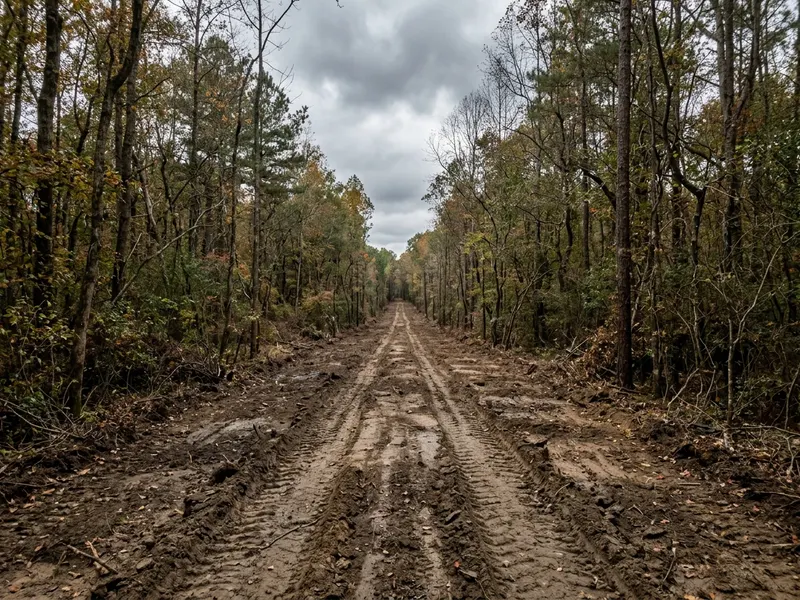
Access is usually MD-235, then a subdivision street that was not built for a wide machine. Gates, overhead wires at the entrance, and a neighbor’s fence set the path in. Base traffic on the roads around the air station is a scheduling fact, not a selling point: morning and evening the highway stacks up, and a trailer move gets planned around it.
Near the Patuxent the rules change. Tidal shoreline can put a parcel in the Critical Area, and St. Mary’s County land use is who says whether a given lot is in it. A pine stand a quarter mile back from the water is ordinary mulching. A bank above the river is not. The walk-through is where that gets sorted, before a price assumes the whole acre can be opened.
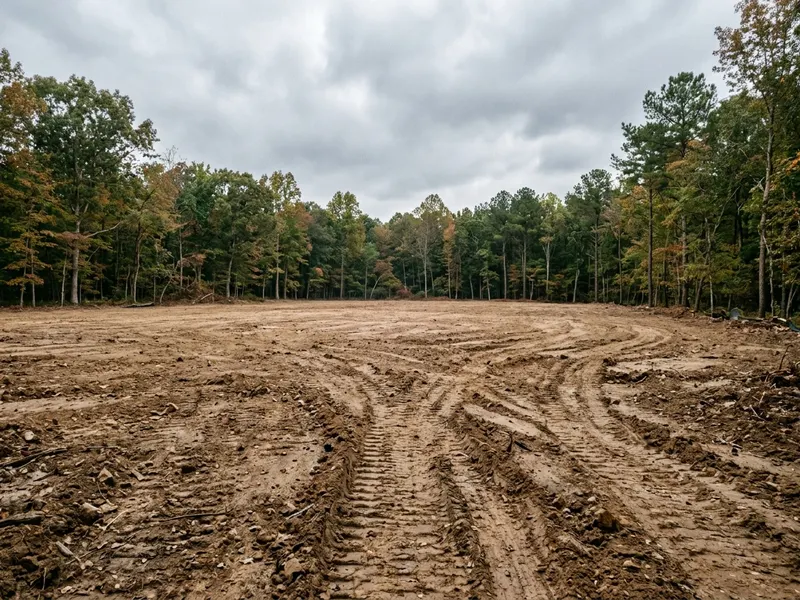
If the job is a house pad, a driveway, or a perc area that has to be bare, that is lot and land clearing. The mulching method itself is on the forestry mulching page, and the day-of sequence is in how forestry mulching works, step by step. California is the next town up MD-235. Leonardtown is the county seat, inland from here.
Tell us where the parcel is and what you want opened. The estimate is free. Reach out today and you will hear back today.